
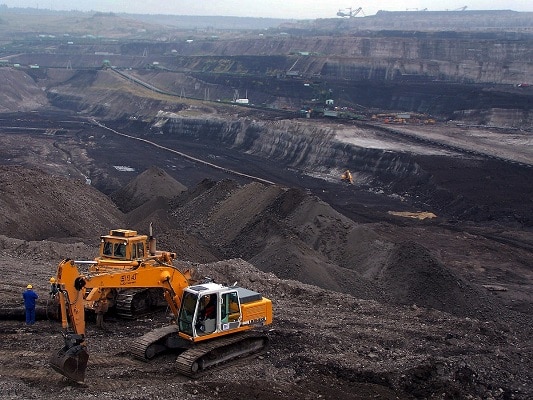
The blowup with the Ukrainian President Volodymyr Zelensky, the Congo-Rwandan peace deal, and the ambition to annex Greenland. Each incident in the 2025 American foreign policies seems to be unrelated. However, all link to one objective: the American effort to secure and diversify the supply of critical minerals.
Critical minerals refer to 50 minerals, including lithium, cobalt, and rare-earth elements. These materials are used for electronic gadgets, cars, and military weapons. However, the People’s Republic of China dominates both the production and the supply of critical minerals, especially rare earths: Beijing mines 70% of the global supply and processes 90% of the world’s supply, due to its abundant reserves and non-compliance with environmental protection rules. That was why Deng Xiaoping, the paramount political leader in 1980s and 1990s China, said, “The Middle East has oil and China has rare earths.”
Sometimes, China exploits its rare-earth and critical mineral reserves as a coercive measure. A good example is the 2010 trade embargo on Japan. Soon after the Japanese authorities detained a Chinese fisherman who violated Japan’s exclusive economic zone, Beijing temporarily banned the export of rare-earth to Tokyo, which relied on 80% of its rare-earth imports from Beijing at that time. In December 2024, the Chinese Commerce Ministry announced a ban on the export of five critical minerals, including gallium and germanium, that are useful for weaponry and electric gadgets, to the United States.
That is why the Donald Trump administration seeks to secure and diversify the supply of rare earth and other critical minerals. In February, Washington forced Kyiv to provide access to $500 billion-worth of Ukraine’s rare-earth and other minerals to offset previous support for Ukraine’s defense against Russia’s invasion. After the Oval Office quarrel between Zelensky and Trump on February 29, Kyiv agreed to fund the future U.S. military assistance by extracting Ukraine’s rare earth and other critical minerals.
Similarly, the Democratic Republic of Congo offered Washington access to its natural resources by mediating a ceasefire with neighboring Rwanda in June. Also, Greenland has the eighth-highest rare-earth reserves on the planet.
In October, President Trump and his Australian counterpart, Anthony Albanese, signed a critical mineral pact, aiming to “assist both countries in achieving resilience and security of critical minerals and rare earths supply chains, including mining, separation, and processing,” by raising $1 billion from each government in the next six months.
Securing and diversifying the supply of rare earth and critical minerals is an urgent task. China’s current monopoly over minerals could lead to supply disruptions amid various geopolitical risks, including natural disasters and a potential invasion of Taiwan. Even in the absence of crises, Beijing might use rare earths and critical minerals as leverage or blackmail, as it did against Japan in 2010. China is effectively using minerals to secure concessions from the United States during trade negotiations in response to Trump’s reciprocal tariffs. Washington must not let Beijing hold any more leverage.
U.S. policy is heading in the right direction. However, diversification and stable supply require significant time and cost. The existence of huge reserves does not necessarily mean that they are ready for production anytime soon. Australia, which had 5.7 million metric tons (MT) of rare earths in 2024, produced only 13,000 M.T., while China had 44 million M.T. and produced 270,000 M.T. Beijing has established a comprehensive mining and supply system based on subsidies and has produced minerals at low cost, partly by disregarding environmental rules. Although Trump boasted that Australian rare earths would reach the American market within the year, they will not be a strong alternative to Chinese ones in the near future. Production takes many years or even decades, especially for areas that have not established enough processing lines, such as Ukraine, D.R.C., and Greenland (Despite the eighth largest reserves, the world’s largest island doesn’t produce rare-earths)
Moreover, war-ravaged nations, such as Ukraine and the D.R.C., might find it difficult to mine even rare earths and other minerals. Several administrative initiatives are not silver bullets. Yet Washington’s rare-earth strategy increasingly risks appearing as security-wrapped self-interest. The initial U.S. request that Ukraine provide access to an estimated $500 billion worth of critical minerals as compensation for past military aid has drawn criticism for exploiting a country in crisis. Likewise, the Congo–Rwanda peace deal has faced accusations of reducing a complex conflict to a mere contest over access to rare earths. (On December 10, Rwanda-backed M23 militia restarted the offensive against D.R.C.)
The United States might face the same fate as Japan: While it made efforts to diversify its mineral supply after the embargo, Tokyo still relies on more than half of its supply from China due to the high cost of decoupling. However, Washington has leverage that Tokyo doesn’t: the alliance system. By working with the G7 and like-minded nations, such as India, the United States could more effectively diversify its supply by mining and producing rare earth and other minerals with diplomatic and economic tools than Tokyo did. Some trade deals with the partners, including the U.S.-Japan 550 billion investment plan in September, aim to fund the secure supply of critical minerals. Washington should use such a scheme wisely. Stable supply and diversification are not a sprint, but a marathon with teammates.
Domestically, Washington should create an environment that enables the production of critical minerals. The existing legislation, like the Defense Production Act, is highly useful. (D.P.A. boosted the production of face masks during the 2020 COVID pandemic) Moreover, the Trump administration announced its latest equity deal with Vulcan Elements, a North Carolina-based start-up that makes rare-earths magnets, such as $50 million from the Commerce Department and $620 million from the Defense Department. Moreover, there is a need to pass a law similar to the 2022 C.H.I.P.S. and Science Act, which encourages the production of semiconductors in the United States through a $28 billion subsidy to research and development and production lines and invites foreign producers, including Taiwan’s T.S.M.C.
However, should only mining be the source of critical minerals? Producing critical minerals, especially rare earths, costs not only financial costs, but also environmental costs, such as water pollution by chemicals and radioactivity contained in minerals. Disregarding the environmental rules as China does is nearly impossible and immoral in other countries.
That is why the idea called “urban mining” is critical. In the 1990s, Michio Nanjo, then a professor at the University of Tohoku in Japan, argued that rare metals and gold could be mined from discarded electronic devices and cars. Urban mining drew attention in Japan after the 2010 Chinese embargo of rare earths. A good example was the 2020 Tokyo Summer Olympic and Paralympic Games. All medals in the game were made from recycled materials through urban mining.
Of course, urban mining is far from perfect. Technical and cost issues are unavoidable: extracting rare-earth and other critical minerals requires collecting unused gadgets. In many cases, only a tiny amount of material can be extracted from a large amount of waste. Additionally, the waste generated during extraction must be processed within the price of the recovered precious metals. These issues prevent the materials made by urban mining from being competitive. Not only Japan or the United States, but also the G7 and like-minded countries should promote urban mining by governments’ subsidies and sharing the technologies and know-how, which might make it more competitive. In July, the so-called “Quad” nations (the United States, Japan, Australia, and India) agreed to use urban mining in Southeast Asian nations. The possible “Critical Mineral Act” ought to include not just mining, but recycling.
Critical minerals, especially rare earths, seem to dictate the 2026 US foreign policies. The lesson is clear: securing critical minerals cannot rely solely on hard-nosed extraction diplomacy. Pressuring vulnerable states, betting on unstable regions, or ignoring environmental costs risks undermining both U.S. credibility and long-term supply security. A durable strategy must combine allied cooperation, domestic industrial policy, and systematic investment in urban mining. By treating recycling not as an afterthought but as a strategic asset, Washington can reduce geopolitical vulnerability while aligning security policy with sustainability and values.
- Missing People: Why Japan is eager to talk with North Korea. - April 27, 2026
- The Resurgence Of Special Services: How Takaichi Could Reform Japan’s Intelligence Community - April 12, 2026
- Japanese PM Takaichi Won Snap Election By Landslide - February 11, 2026