
Last week, Australia stated that 13 members of Australian families in Syria linked to ISIS are planning to come home. However, Home Affairs Minister Tony Burke stressed that they will not receive any government assistance, noting that the lack of support they are receiving is a “direct reflection” of the disgraceful and appalling decisions they made to join the Islamic State. Though it was reinforced that returnees with a criminal history or suspected of one would face the law upon arrival, citizens are being stopped from returning due to unspecified procedural issues and return prevention laws. In February of this year, a group of 34 Australian citizens were turned back by Syrian authorities as one of the women included was faced with a temporary exclusion order by Australia, referencing a 2019 law where high-risk citizens with ties to the Islamic State would be barred from returning. In this lies the dilemma many of the world’s states—including Australia—are facing with regard to repatriation, presenting how women and children being held in detainee camps in Syria are not being provided with adequate repatriation and reintegration efforts. They are rather met solely with criminal prosecution, being hindered from returning due to legal tools meant to prevent their return, which holds grave humanitarian and security-based implications.
After the ISIS “caliphate” fell in 2019, thousands of people were put into detainee camps in Syria due to their membership in, or linkage to, the Islamic State. Most detainees are children and about 8,000 foreigners have been held in the camps from about 60 different countries. As mentioned, the international response to the repatriation of ISIS-linked individuals has defaulted to demeanors that are not focused on positive reintegration. This exact response is inherently defeating state goals and values in which the efforts to prevent repatriation or failure to provide basic assistance systems will prove detrimental through security and humanitarian means undermining counterterrorism efforts and human rights commitments. The lack of repatriation is fostering a possible next generation of extremists and allowing increased ISIS presence in a centralized location. The United Nations has warned that the detainee camps can easily become “incubators” for terrorist radicalization and recruitment. 80 percent of the children at the Al-Hol camp are under 12 years old—an impressionable age. Additionally, guards are conducting almost nightly raids where they beat and threaten detainees. The detentions violently upheld by guards expose women and children to harm in which they can be trafficked, exploited, or recruited. Alongside radicalization, violence has risen on behalf of individuals loyal to ISIS in which they have attacked other detainees, authorities, and humanitarian aid workers. In 2021, 90 people were murdered at Al-Hol according to the U.N. One year later, two sisters were found dead in a sewage canal after they were raped and stabbed.
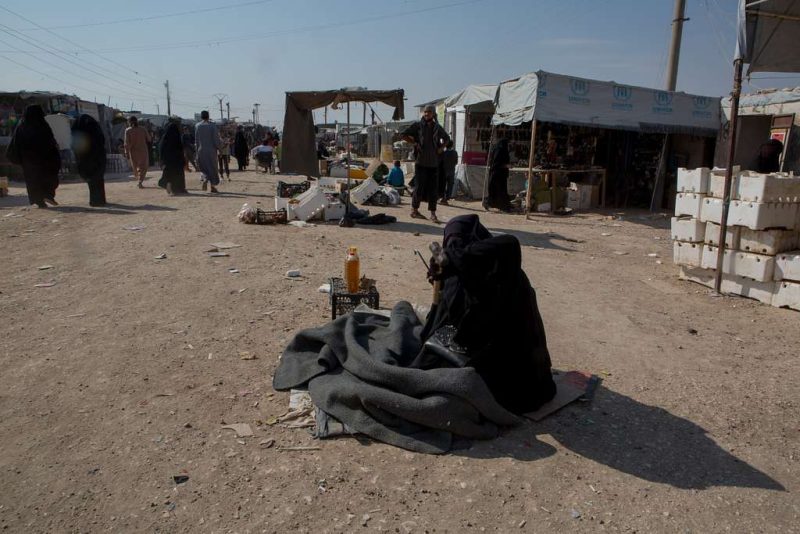
As for humanitarian effects within the camps, detainees face dangerous environments and are being held in “inhuman, degrading, and life-threatening conditions” according to Human Rights Watch. Children are not being barred from this which frames the issue as collective punishment—an action that can be classified as a war crime. Medical care, access to clean water, and shelter are slim and education and recreational activities for children are widely inadequate. Security at these camps is also quite precarious, in which the security risks occurring at these camps contribute to the degraded humanitarian situation. The risks are causing disruptions to service deliveries and allow disease to flourish amongst the thousands of people located within the camps, including mostly children. There is also fear contributing to this mistreatment, as authorities were afraid that ISIS-linked individuals would try to break free when aid entered the camp’s gates, thus interfering with the access to humanitarian aid in the camps. This confinement ultimately reinforces the heightened opportunity for recruitment, entirely undermining Western governments’ goals and aims.
Repatriation inherently has its risks but it is advantageous for states. The states’ lack of acknowledgement of this directly contributes to the problem at hand. The European Council on Foreign Relations outlines the benefits of and advocates for repatriation and reintegration. Repatriation makes for easier intelligence gathering and allows information on group activities and methodology. It also allows state authorities to turn individuals into assets who would then be used to discourage others from joining extremist groups or following extremist ideals. This intelligence gathering evidently makes it far easier to keep track of fighters who come home, rather than losing track of members who may escape the camps and continue with extremist networks; essentially, avoiding repatriation makes the security threat worse. When states hold these individuals, they can uphold their commitments in prosecuting them and putting those involved in extremism and linked individuals through disengagement programs.
Governments must move forward with the repatriation process for their own good and aligned commitments to counterterrorism and humanitarianism. Children must be treated differently than their adult counterparts and states must invest in structured and effective repatriation processes to address humanitarian issues and security threats rather than allowing violence and inhumane conditions to flourish. Kosovo is an example state of these principles put into action. Namely, Kosovo has been one of the most successful states that have gone through with effective repatriation in which they have allowed hundreds of its Kosovan citizens to return through a defined, effective process. While detaining certain individuals upon arrival, Kosovo heavily focuses their repatriation process on rehabilitation and believes it is the responsibility of the home state to ensure the security threat of an individual is eliminated so they can become a productive member of society. This contrasts with that of the neighboring EU countries who try to use dual citizenship as an excuse to not repatriate—to Kosovo, “once a Kosovan, always a Kosovan,” no matter a second citizenship or not. Kosovo uses a multifaceted governmental approach to provide medical and psychiatric treatment along with education followed by a post-release continual integration program. Australia is partially using effective strategies as children who return to Australia will take a countering violent extremism program and will have action taken against them if they begin to exhibit signs of concern. Thus, a long-term strategic and multifaceted effort from the government is the key to success. Governments who find themselves in similar situations to Australia must move forward with similar action plans in order to solve the humanitarian and security threat invoked by detainee camps by establishing thorough, effective repatriation plans.