
In a statement made on Monday, September 5th, the Kazakh Foreign Ministry announced that Chinese President Xi Jinping, is to visit Kazakhstan on September 14th. The news comes just a few weeks after many false reports stated that Xi’s next foreign trip would be to Saudi Arabia. This particular trip is drawing enormous attention because it will be Xi’s first time out of China since the beginning of the COVID-19 pandemic in 2020. Xi is set to meet Kazakh President, Kassym-Jomart Tokayev, as well as sign a number of bilateral agreements in various areas of cooperation. Kazakhstan and China have close ties, particularly in trade, which spans products including minerals, metals, and energy. This trip also comes amidst expectations that Xi will seek a third leadership term at a congress of China’s ruling Communist Party in October, which only takes place twice every decade. A third term for Xi will break current precedent of Chinese leaders not serving more than two terms in office. Director of the SOAS China Institute in London, Steve Tsang, observed that the choice to travel so close to the event is “an articulation of confidence in his position”.
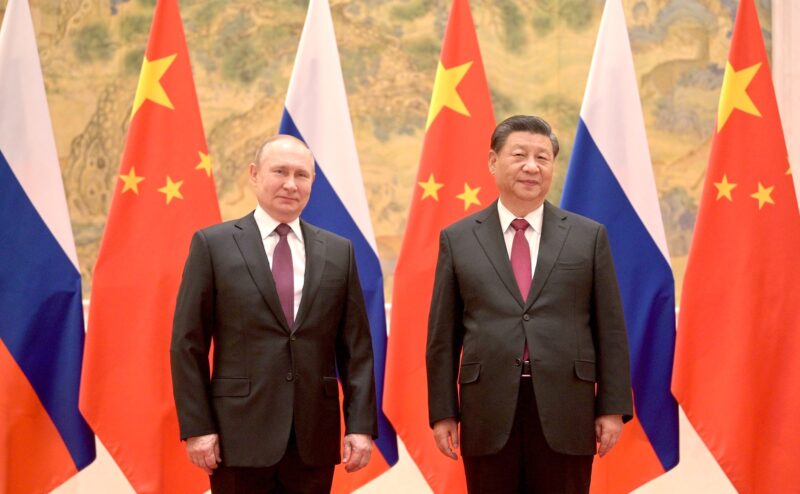
Following his travels in Kazakhstan, Xi is expected to then go to Samarkand, Uzbekistan for the Shanghai Cooperation Organization (SCO) summit. The SCO comprises China, Kazakhstan, Kyrgyzstan, Russia, Tajikistan, Uzbekistan, India, and Pakistan. China, which helped found the SCO in 2001, sees the group as a counter to Western alliances. At the Summit, it is anticipated that Xi and Russian President Vladimir Putin will hold talks for the first time since Russia’s invasion of Ukraine in February. Then, according to an advisor to the Indonesian president, Xi is to attend the November G-20 Summit in Bali, also along with Russian President Vladimir Putin. Xi is the only G-20 leaders that is yet travel out of his country since the covid-19 pandemic.
While there are no known plans for President Xi to pay a visit to Russia himself, Li Zhanshu, the Chinese Communist party’s third-highest ranking official, attended an economic forum alongside Putin in Vladivostok, Russia on the 7th of September. Alexander Gabuev, a senior fellow at the Carnegie Endowment for International Peace, noted, “The message is that China might not be stepping out of its way to violate the sanctions to help Russia, but it’s definitely not throwing Russia under the bus. If it’s neutrality, then it’s definitely pro-Russian neutrality.” This message of “pro-Russian neutrality” will be further solidified when Xi talks to Putin at the SCO summit.
Many are speculating as to why exactly Xi has decided to make Kazakhstan his first foreign trip, as opposed to a state visit to Moscow. However, it is not necessarily surprising when we consider the fact that Kazakhstan is one of the world’s top producers of uranium. In 2021, the country produced the largest share of uranium from mines – 45% of the world’s supply. Uranium is used as fuel for nuclear power plants, nuclear reactors in naval ships, and submarines, and other defense purposes around the world. Thus, it may be purported that this is a trip planned with a major focus on energy negotiations.
Additionally, Kazakhstan is where Xi launched the Belt and Road Initiative (BRI) in 2013. Thus, the country is “very significant for him,” according to Professor Alfred Wu from the Lee Kuan Yew School of Public Policy. The BRI has faced criticism for being quite an expensive infrastructural project, but Xi wants to prove that his vision and policy decisions remain relevant and feasible, and ultimately, he desires to continue efforts at reinforcing Beijing’s influence throughout Asia. Traveling throughout Central Asia is likely to strengthen his mission.
It should worth noting that there is tension within Kazakhstan regarding Xi’s upcoming visit. According to Radio Free Europe, there was a rally early in the week in Almaty, the country’s largest city, calling on Kazakh President Kassym-Jomart Tokayev to “raise the issue of their relatives, who they say are being illegally held in custody in China’s northwestern region of Xinjiang.” Just last week, the United Nations released a new report noting the “appalling treatment” of Indigenous people in Xinjiang, including Kazakhs, Uyghurs, and other Muslim ethnic groups. The statement reads that the treatment “may constitute international crimes, in particular crimes against humanity.” In Xinjiang, Kazakhs are the second-largest Indigenous group, after Uyghurs.
Analyzing what Xi’s underlying intentions may be as he begins to travel abroad again is important to understanding China’s values and how the country sees itself on the international stage. Energy, Russian support, and overall influence within the Asian region are among the values China is promoting through these upcoming visits. It can also be assumed that Xi is fairly confident in maintaining the presidency for a third term. Looking forward, it is also necessary to understand the implications of Xi visiting different countries, such as Kazakhstan. Tokayev should listen to Kazakh citizens and use this opportunity to speak with Xi to raise the issue regarding the treatment of Indigenous communities in Xinjiang, but this is not likely given that Kazakhstan and China want to use the meeting to demonstrate their good relations to the rest of the world. And China certainly understands the importance of messages like this. Just last month, US House of Representatives Speaker Nancy Pelosi visited Taiwan to “promote democracy.” Not liking her public display of support, China responded to Pelosi by conducting live-fire military drills around the island country. While summit meetings and conferences can be productive in dealing with international issues, the underlying intentions cannot be ignored.
- Pakistan Approves Agreement Draft To Provide Troops For World Cup Security In Qatar - September 12, 2022
- Tunisian President Saied Holds Referendum, Critics Fear For Democracy - August 27, 2022
- U.S. Simplifies Application Process For Afghan Special Immigrant Visa - August 21, 2022