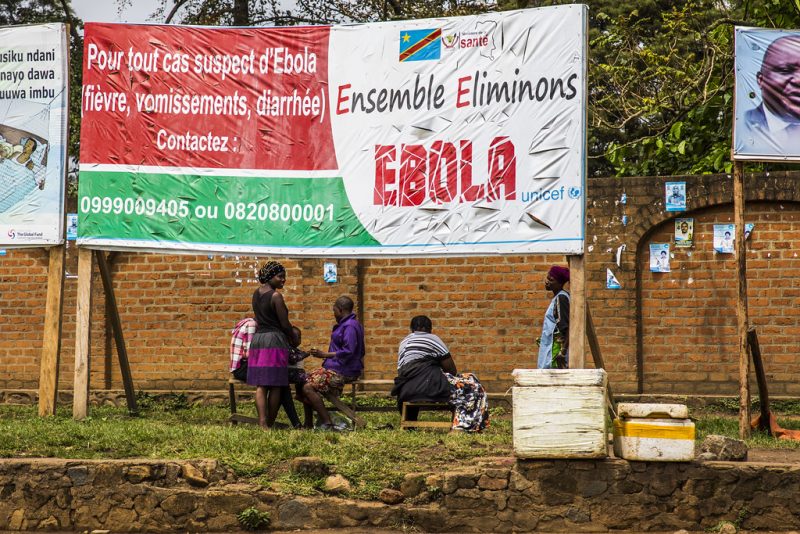
Last week, the Ministry of Health of the Democratic Republic of the Congo (DRC) confirmed an active outbreak of the Ebola virus in the northeast region of the country. The first cases were found in Ituri Province, though the disease has spread in the last seven days to nearby provinces and neighboring Uganda. According to the Associated Press, the strain of Ebola virus that is spreading through the DRC is the Bundibugyo ebolavirus, a comparatively rare strain of Ebola with no vaccines or treatments. The outbreak comes at a time of exacerbated violence in the DRC, and, as the conflict continues, the outbreak only worsens.
In early 2025, tensions between the DRC and Rwandan-backed militant group M23 escalated into conflict, with the militia eventually taking control of Goma, a major city in the eastern region of the DRC. The conflict has sent millions of refugees into nearby countries and displaced millions from their homes, many of whom were already internally displaced. The conflict up until February 2026 created “one of the largest and deadliest humanitarian crises in the world” (The Council on Foreign Relations).
With the consistent movement of people within and out of the DRC, the stress on health infrastructures created by the conflict, and an already concerning need for aid, the World Health Organization predicts that the number of those infected is unknown and likely much larger than current figures suggest. The outbreak was reported concerningly late, especially due to its scale, which The New York Times attributes to the northeastern region being a hotbed for the conflict between the DRC and M23.
American withdrawal from the World Health Organization and termination of USAID programs are likely hindering the ability of the DRC and Uganda to respond quickly to the outbreak and take the necessary steps to prevent the disease from spreading further. Three days ago, the first American tested positive for the Bundibugyo virus, a missionary working in the DRC (U.S. News). According to CNN, America has also taken steps to prevent the entry of U.S. citizens and lawful permanent residents coming from Ebola-infected regions of Central Africa, yet has made no attempt to send aid to the DRC or restart cancelled research programs. This highlights a national selfishness last seen during the COVID-19 pandemic in 2020.
The keys to controlling this and future outbreaks of infectious disease are to end or prevent conflicts and to deter nationalism from hindering international cooperation. With a decrease in violence in Ituri and the larger northeastern region of the DRC, more people would be able to access the medical resources they need, as well as feel safer in coming forward to report their symptoms. More broadly, the world suffered during the COVID-19 pandemic from ‘vaccine nationalism’ which prevented countries with excess resources from providing these resources to other countries that needed them more, all for the sake of national interest. This problem prevailed at a time when the international community was more connected and less at risk. Now, as powerful countries end aid programs and question institutions centered on international cooperation, aid to those infected with transmissible diseases needs to be the priority of the international community, and efforts must be made to prevent the outbreak and spread of these diseases for the benefit of the global population.