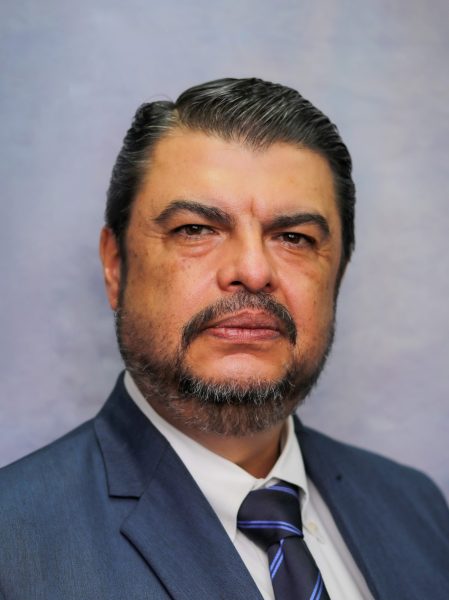
Costa Rican President Rodrigo Chaves Robles has agreed to accept migrants deported by the United States under a new bilateral agreement signed this past week. Reuters mentions how the Costa Rican presidency will be able to choose whether to accept or deny the migrants, but that around 25 migrants will be accepted per week with the help of U.S. financial support, as well as United Nations housing and food assistance. The Associated Press notes that this agreement is meant to help the Trump administration’s policy of deporting immigrants to lower-income nations.
ABC News shared a statement from Costa Rican Public Security Minister Mario Zamora Cordero, stating that “Costa Rica is prepared to see this flow of people,” and that the government will work with the United States to return these migrants to their homes. Former Department of Homeland Security Secretary Kristi Noem was also quoted by ABC saying, “We are very proud to have partners like President (Rodrigo Chaves) and Costa Rica, who are working to ensure that people who are in our country illegally have the opportunity to return to their countries of origin.” The Associated Press includes the opinions of legal experts, who criticize this agreement as effectively allowing the U.S. to bypass protections that normally prevent returns to dangerous conditions.
Although this agreement may allow the U.S. to bypass certain migration laws, there is a positive element in that the migrants will not be deported directly back to their home nations, where they may be in danger, but rather to Costa Rica or another agreeing nation. However, there is a risk in Costa Rica accepting additional migrants due to their previous mistreatment of migrants from Asia this past year. These migrants were detained, stripped of their passports, and given little to no legal representation under a previous U.S.-Costa Rica deal. The basis of this agreement, as a way for the U.S. to bypass laws and shift responsibility, does not solve the broader issue of why migrants leave their home countries. This agreement risks functioning as a short-term solution that shifts responsibility rather than addressing the root causes of migration. To directly target peace and security, nations should address issues regarding poverty, organized crime, or excessive violence to create safer communities and reduce the need for irregular migration or asylum.
Since President Trump reentered office in 2025, it has been a goal of the administration to enforce strict migration laws, which led to the stronger enforcement of U.S. Immigration and Customs Enforcement. This agreement between the U.S. and Costa Rica can be seen as another form of migration crackdown by the Trump Administration. Instead of focusing on detaining migrants in the U.S. or deporting migrants back to their home nations, they are now part of a wider deportation strategy in which migrants are sent to low‑income nations so that the U.S. carries less direct responsibility.
The future of these migrants currently remains uncertain, especially for those who may not be able to return to their home countries, leaving the question of where these migrants will reside. This agreement may also set a precedent for migration policy among leading nations, potentially worsening the crises that force them to leave their homes if the underlying causes are not addressed. To achieve genuine peace and security, governments must actively tackle the conditions that cause migration initially, while also ensuring that all migrants are treated with respect to their fundamental human rights.