
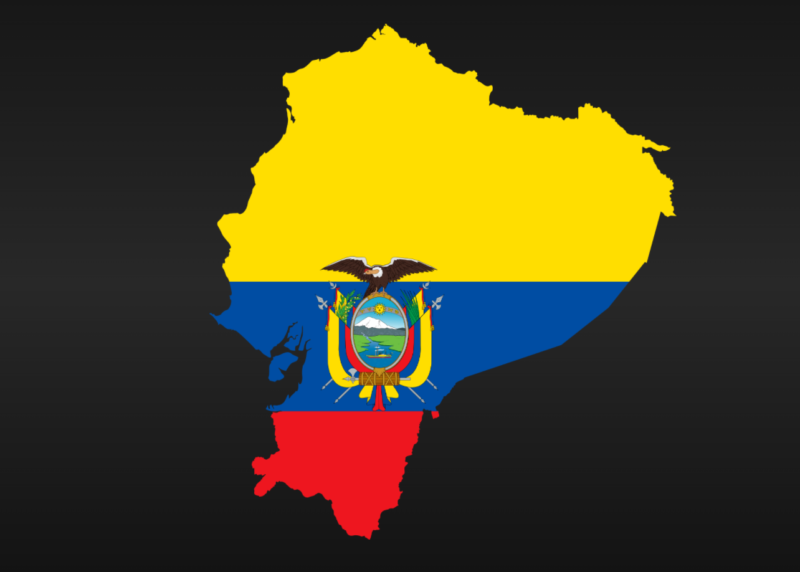
Daniel Noboa announced on September 16th, 2024 that he intends to reverse the policies of his predecessors and permit the establishment of foreign military bases in Andean country. Notably, he has invited the United States to reinstate its former military base in Manta as part of a renewed effort to combat the “War on Drugs,” in response to over 8,000 individuals falling victim to the violence perpetrated by Latin American drug cartels and gang-related activities. This decision has caused a rift between those in favor of foreign intervention and individuals who see this as a threat to Ecuador’s sovereignty, as well as a way for the United States to have a larger influence on Latin American politics.
Historically, Ecuador’s former president, Rafael Correa, expelled U.S. military personnel in an attempt to strengthen national security and uphold the country’s sovereignty. Ironically, this decision had the opposite effect of what was originally intended. Manta had been a critical hub for counter-narcotics operations across Latin America. At the time, Ecuador lacked the resources necessary to fully combat the violence orchestrated by drug cartels. By allowing the United States partial control of its territory, Ecuador was able to implement policies without financial restraint. For example, U.S Soldiers were permitted to patrol the streets and any criminal activity resulting from drug operations would be tried in the United States.
Because of Ecuador’s geographical location positioned between Colombia and Peru, it has become the “middleman” for drug cartels to transport cocaine between both countries. When the United States was actively monitoring the movement of narcotics through these regions, the opportunities for gangs to use Ecuador was significantly reduced. However, with the withdrawal of U.S. forces, cartels have used their influence to manipulate Ecuador’s political landscape. In 2023 Fernando Villavicencio, a prominent candidate and former journalist who advocated for incredibly strict incentives against gang violence, was assassinated. His death highlighted both the extent of the cartels’ control and the fragility of Ecuador’s political landscape.
However, critics argue that Noboa’s decision raises a separate set of security concerns, particularly regarding national sovereignty. In an article from The Latin American Post titled “Ecuador’s Plan to Fight Crime with Foreign Military Bases Sparks Sovereignty Debate,” the authors highlighted a key concern: “For many, the idea of welcoming foreign troops onto Ecuadorian soil feels like an erosion of the hard-won independence that the country has fought for over the years,” (The Latin American Post, 2024). This sentiment is widely shared, with many fearing that the presence of foreign military forces could undermine Ecuador’s autonomy. While U.S. military support may help address the country’s immediate challenges, it also risks creating a dependency on foreign intervention.
Additionally, hosting a U.S. military base could pull Ecuador into geopolitical conflicts it has historically avoided. Ecuador has often maintained a neutral stance in global politics, carefully balancing its relationships with various international powers. Aligning too closely with the U.S. through a military partnership might strain diplomatic ties with neighboring countries or global actors who see this as an extension of U.S. influence in Latin America. While the focus now is on fighting drug cartels and reducing crime, the long-term effects of allowing foreign troops into Ecuador may have broader political consequences. Taking a direct example from the security dilemma, countries who see the U.S as a threat as an opposed to an ally, will mobilize their efforts to reinforce their borders and hopefully protect themselves from a potentially unified force between the United States and Ecuador.
However, the safety of Ecuadorian citizens is increasingly at risk due to the violent actions of drug cartels, which now threaten the country from within. These criminal groups have not only displaced communities but forced civilians into their illicit operations by physically controlling particular neighborhoods. The country lacks the resources to manage this crisis on its own, both economically and militarily.
In conclusion the immediate security crisis has made international collaboration necessary. Without it, Ecuador risks further destabilization at the hands of powerful criminal networks. Noboa has made it clear that international support is crucial. As he stated, “the need for international cooperation in the fight against organized crime” is necessary for restoring any sense of peace. Without external help from the United States, then Ecuador will struggle to contain the cartel’s growing influence, and it will threaten the Ecuador’s sovereignty.
- The United Kingdom’s Plan For Indonesia And South Korea As Political Tensions Rise Across The World - December 14, 2024
- Ecuador’s Plan to Welcome Foreign Military Bases Raises Questions Related to Security and Sovereignty - December 2, 2024
- The Rise Of Organized Crime And Its Threat To Indigenous Activists In Ecuador - November 11, 2024