
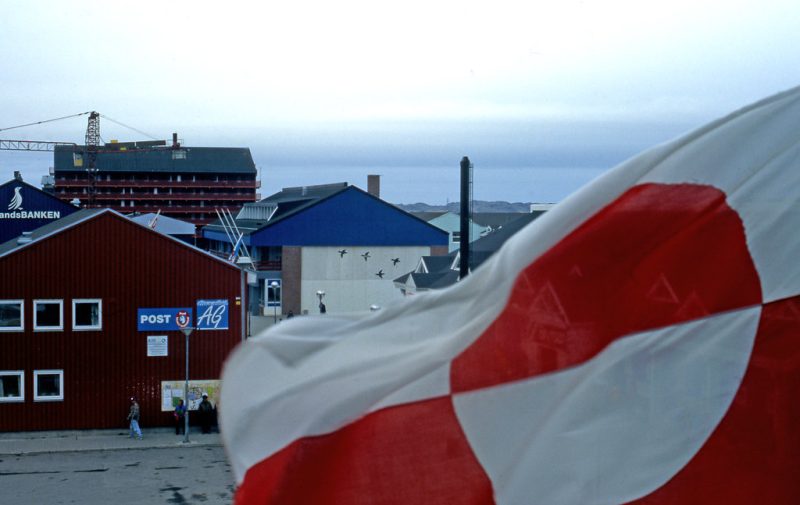
As tensions remain high between Europe and the U.S. over Greenland’s acquisition, U.S. President Donald J. Trump recently announced a pause on threatened tariffs on 8 European countries. Last Saturday, Trump threatened to impose tariffs on February 1st if a deal on “the complete and total purchase of Greenland” was not reached. While European leaders have voiced concerns over the legality and strategic value of such a purchase, U.S. leaders argue that Greenland’s acquisition will help advance Western foreign security interests to protect the world from new hegemons advancing in defense technologies and mineral resources.
According to M.S.N.B.C., Trump wrote on Truth Social, ¨Based upon a very productive meeting that I have had with the Secretary General of N.A.T.O., Mark Rutte, we have formed the framework of a future deal with respect to Greenland and, in fact, the entire Arctic Region.” After Trump announced the tariff pause, stocks began to soar. Trump’s comments over the weekend roiled global markets, as stocks slumped just a week ago. As the economic recovery is underway, many European leaders are both optimistic and cautious in their approach to Trump’s rhetoric and his stance on Greenland.
In a report from the Associated Press, Danish Foreign Minister Lars Løkke Rasmussen said he welcomed Trump’s ruling out taking “Greenland by force” and pausing ”the trade war with Europe.” However, he additionally added that the deal must come “while respecting the red lines of the Kingdom of Denmark.” While there is optimism about recent U.S. and European discussions, addressing U.S. foreign interests in the Arctic without compromising Greenland’s status in Europe remains unresolved. This issue worries many Greenlanders and heightens anxiety about the possible use of force against European allies and the disruption of alliances. The Guardian reported that before backing down on tariffs, Trump gave a rambling speech. He said the U.S. would not use force to seize Greenland but would use economic and diplomatic power to obtain it. Additionally, many Greenlandic representatives said that, despite Trump’s deal with N.A.T.O., the military alliance has no mandate to negotiate regarding Greenland. Greenlandic Danish parliament member Aaja Chemnitz Larsen wrote on Facebook, “Nothing about us, without us,” asserting Greenland will not accept its autonomy being dictated by outsiders unless it is included in the conversation. Evidence shows continuing anxieties about renewed conflict and Greenlandic representation in the deal. These concerns need to be addressed to restore confidence in peace.
Historically, the United States has initiated several attempts to acquire Greenland since the 19th century, after the U.S began looking for more territories after its purchase of Alaska from Russia. Expansionists argued that this would expand the U.S’s wealth through Greenland’s minerals, coal, and fisheries. The Danish dismissed these exchanges as ludicrous, especially when the U.S. offered the Philippine Island of Mindanao in exchange. In 1946, Truman tried to purchase Greenland outright from Denmark, despite their resistance. While the U.S. has had some influence on Greenland´s defense infrastructure after the Nazi German envoy to Denmark authorized some operations in 1941, Denmark has shown no desire to sell Greenland to the U.S. since then, due to widespread public opposition. The Washington Post cites a report that only 6 percent of the Greenlandic population wants to be a part of the United States. The island’s population of 57,000 has recognized its home rule government and is interested in retaining its autonomy while remaining part of the Kingdom of Denmark. Trump justifies his recent decision to acquire Greenland as a way to protect against China from gaining more influence in the Arctic, especially since it has retained partnerships with research institutes and defense contractors that operate near the Northern Sea. However, according to the Washington Post, China has also failed to gain a foothold in China, as Denmark has rejected Chinese companies’ attempts to expand their infrastructure and mine Greenland’s resources, showing that the circumstances protecting Greenland´s sovereignty have not been applied only to the U.S. Many remain skeptical of what will happen with U.S. demands for Greenland in the future.
Denmark’s refusal to sell Greenland aims to protect both Greenland’s and Europe’s interests and respects Greenland’s self-governance as a N.A.T.O. territory. The use of force between two N.A.T.O. members would threaten peace within an alliance that supports stable functioning democracies that respect peaceful negotiation. Ongoing tensions among nations in the free world weaken the world´s confidence in future peace.