
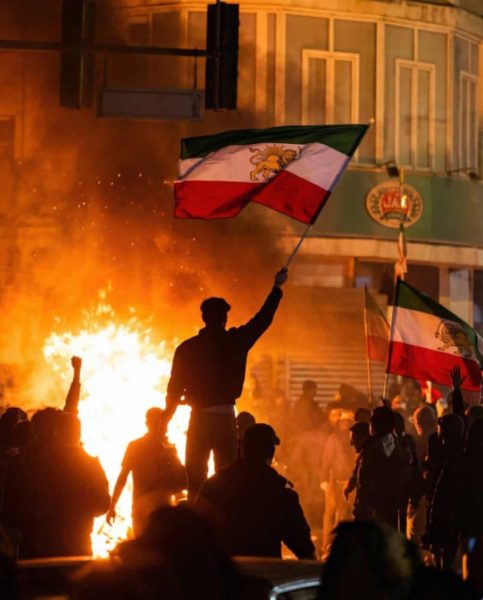
Both Iranian state media and human rights groups reported numerous deaths and arrests made throughout the week in the largest protests Iran has seen in three years. The Human Rights Activists News Agency claims it has confirmed hundreds of deaths and more than 10,000 arrests; however, independent verification has been limited by a near-total communications blackout. Protests began among bazaar traders and shopkeepers before spreading to university students, then to provincial cities. Demonstrations have taken place in western regions, in Tehran, and in the southern province of Baluchistan. Security forces acknowledged large-scale arrests, with the national police chief saying that protest leaders who were active online have been detained.
Iran’s leadership has faced similar cycles of unrest in the past. Major demonstrations took place in 2022 after the death of Mahsa Amini in police custody. These protests were met with mass arrests and lethal force. Earlier episodes of dissent in the 1990s and 2000s exemplify comparable patterns: initial concessions followed by firm repression. Analysts note that the present unrest coincides with a period of political vulnerability after last summer’s conflict with Israel and growing diplomatic isolation.
The protests are unfolding against a backdrop of sustained economic strain. Inflation has remained above 36 percent since March, while the rial has lost roughly half its value against the dollar. The United States and its allies have reimposed sanctions tied to Iran’s nuclear programme, public services such as water and electricity have faced recurring shortages, and international financial institutions forecast a recession in 2026.
What began as demonstrations over inflation evolved into calls for an end to clerical rule. Reza Pahlavi, the exiled son of Iran’s last shah, has emerged as a symbolic figure for some protesters, urging continued demonstrations from abroad. Iranian officials accuse the United States and Israel of orchestrating unrest, claims that have not been substantiated by independent evidence.
The unrest has drawn an immediate international response. U.S. President Donald Trump said Washington stood “ready to help” protesters if violence continued, without outlining specific measures. Iranian officials warned that any American action would trigger retaliation against U.S. and allied forces in the region. Iran’s parliament speaker said U.S. military sites would become legitimate targets in the event of an attack.
U.S. officials are considering options that range from sanctions and cyber measures to potential military action. Some lawmakers have urged caution, warning that force could consolidate domestic support for the Iranian government. Tehran has responded by framing the unrest as part of a broader confrontation with Washington and its allies, declaring days of national mourning for what it calls martyrs of a national struggle.
Senior political figures have adopted a mixed public posture. President Pezeshkian has spoken of dialogue and acknowledged public grievances, yet security agencies continue to make large-scale arrests and prosecutions. At the same time, Supreme Leader Ayatollah Ali Khamenei said Iran would not “yield to the enemy,” and warned that those he described as rioters should be dealt with firmly. Iran’s attorney general has stated that protesters could be treated as “enemies of God,” a charge that carries the death penalty.
The protests mark one of the most significant challenges to Iran’s political order in years. Economic pressures and internal divisions now intersect in ways that leave little room for quick resolution between the Iranian state and the people, as well as future confrontation between the U.S. and Iran.
- The Strategic Stakes Behind the Greenland Controversy - February 12, 2026
- Iran Faces Its Largest Protests In Three Years As Crackdown Deepens - January 28, 2026
- U.S.-Brokered Peace Deal Advances Between Russia and Ukraine Amidst Territorial Disputes - January 14, 2026